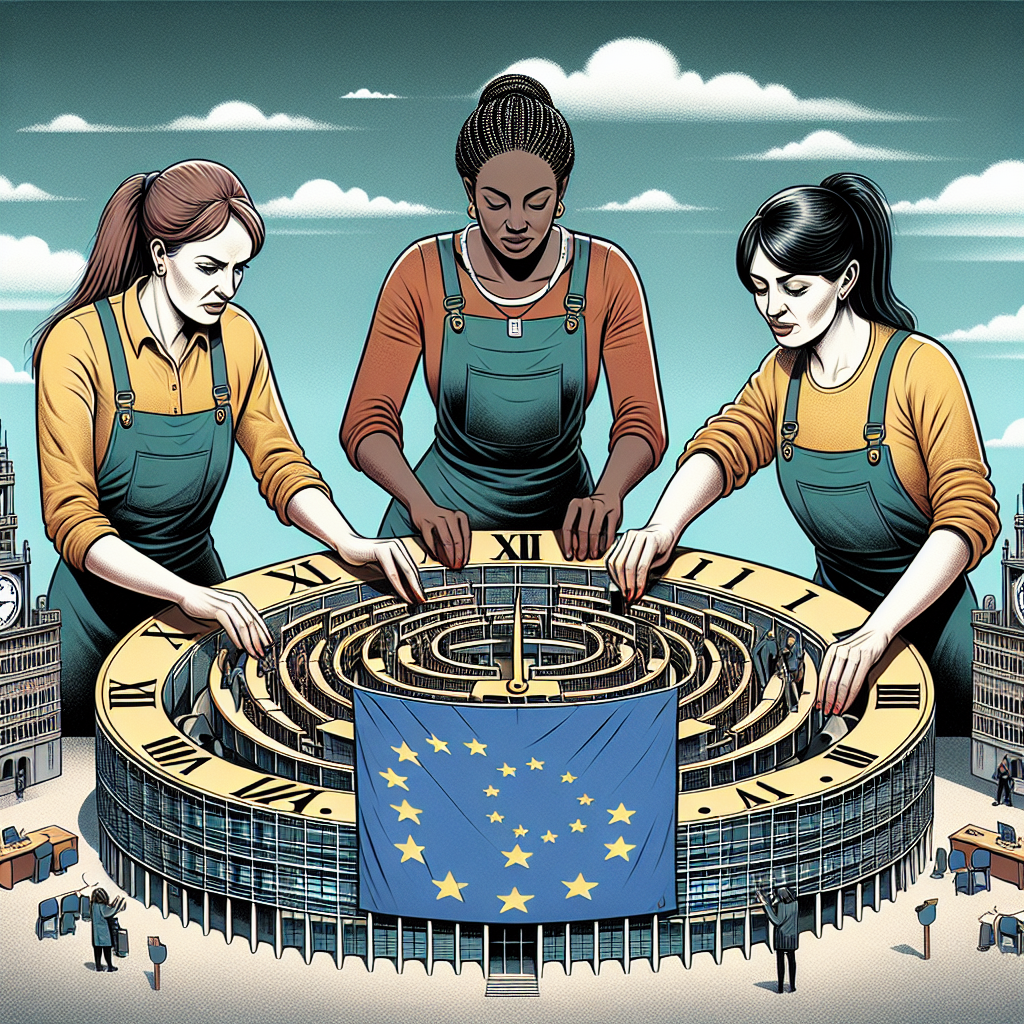
Europe’s Pay Gap Problem: Women Work Two Months Free (And Nobody’s Thrilled About It)
Here’s a fun fact that’s not fun at all: European women essentially work 54 to 67 days a year for free compared to their male counterparts. That’s right—nearly two months of unpaid labor. And if you throw in all the cooking, cleaning, and family organizing women do at home, add another eight weeks to that tally. Suddenly, “having it all” sounds more like “doing it all for nothing.”
The European Parliament just voted overwhelmingly (458 to 72, with 98 abstentions—someone couldn’t decide) to demand an action plan to fix this mess. The irony? Women are increasingly outperforming men in education, yet they’re still getting paid less and undervalued in the workplace. It’s like winning the race but being told you came in second anyway.
The gender pay gap currently sits at 12%, which cost the EU a cool €390 billion in 2023. But wait, there’s more! The pension gap is even worse at 25.4%, meaning retired women are nearly twice as likely to face poverty compared to men. Nothing says “golden years” like financial insecurity after a lifetime of unpaid overtime.
The culprit? Women shoulder a disproportionate share of unpaid care and domestic work—childcare, elder care, and everything in between. This forces many into part-time work or out of the workforce entirely, which tanks their career progression and pension accrual. Meanwhile, member states apparently need encouragement to get men to actually use their parental leave. Revolutionary stuff.
Parliament wants the European Commission to create an action plan that includes better working conditions, fair pay in female-dominated sectors (which are mysteriously always “undervalued”), and investment in reliable childcare services. Because shockingly, when parents can actually afford quality childcare, they can stay in the workforce. Who knew?
As MEP Irena Joveva put it: “We have still not eradicated persistent gender inequality.” Understatement of the century? Perhaps. But at least someone’s finally doing the math on how much free labor women have been providing while everyone pretends equality already exists.
The ball’s now in member states’ court. Let’s see if they can turn these demands into actual change—or if women will still be working two months free in 2027.