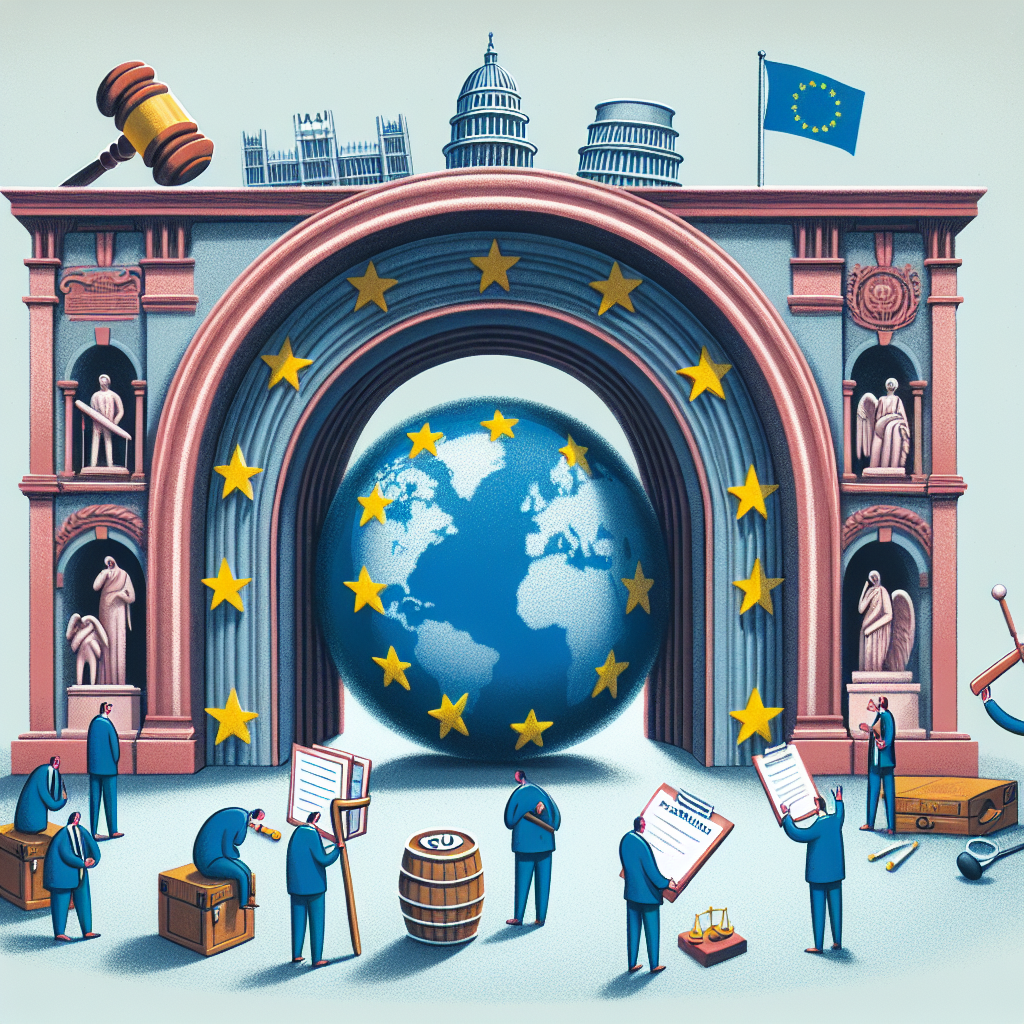
EU’s Global Gateway Gets a Parliamentary Reality Check (Spoiler: It’s Awkward)
Well, well, well. The European Parliament just dropped its first report card on the EU’s Global Gateway Initiative, and let’s just say someone’s getting called to the principal’s office.
For those keeping score at home, Global Gateway is the EU’s €300 billion answer to China’s Belt and Road Initiative – basically Europe’s way of saying “we can build stuff too!” Launched in December 2021, it was supposed to be the sustainable, values-driven alternative to Beijing’s infrastructure bonanza. Noble goal, right?
Here’s where it gets spicy: MEPs just voted (371 in favor, 146 against, 80 abstentions) to demand an investigation into why Chinese companies are allegedly involved in Global Gateway projects. Yes, you read that correctly. The initiative designed specifically to counter China’s Belt and Road might be employing Chinese companies. It’s like starting a diet plan and immediately ordering pizza.
But wait, there’s more! Parliament is also throwing shade at the European Commission for being about as transparent as a brick wall. MEPs are demanding clarity on how that eye-watering €300 billion figure was calculated and where the money’s actually going. Apparently, democratic accountability is still a thing people care about.
The report also calls out the Commission’s “overly centralized, top-down approach” – parliamentary speak for “you’re not listening to anyone.” MEPs want a shift to demand-driven projects that actually respond to what partner countries need, not just what Brussels thinks looks good on paper.
Co-rapporteur Chloé Ridel didn’t mince words: the initiative needs “full transparency on financing, effective parliamentary oversight, systematic impact assessments” – basically everything it apparently doesn’t have right now. Meanwhile, Hildegard Bentele emphasized the “enormous” geopolitical opportunity, though one suspects she’s also thinking “if we could just get our act together.”
The silver lining? Parliament wants Global Gateway to focus on energy, critical raw materials, and the green transition – actual strategic priorities. They’re also pushing to integrate it into the next EU budget cycle (2028-2034) with proper oversight baked in from the start.
So there you have it: Europe’s grand geopolitical gambit needs less secrecy, more democracy, and definitely fewer awkward questions about Chinese contractors. Who knew infrastructure diplomacy could be this entertaining?