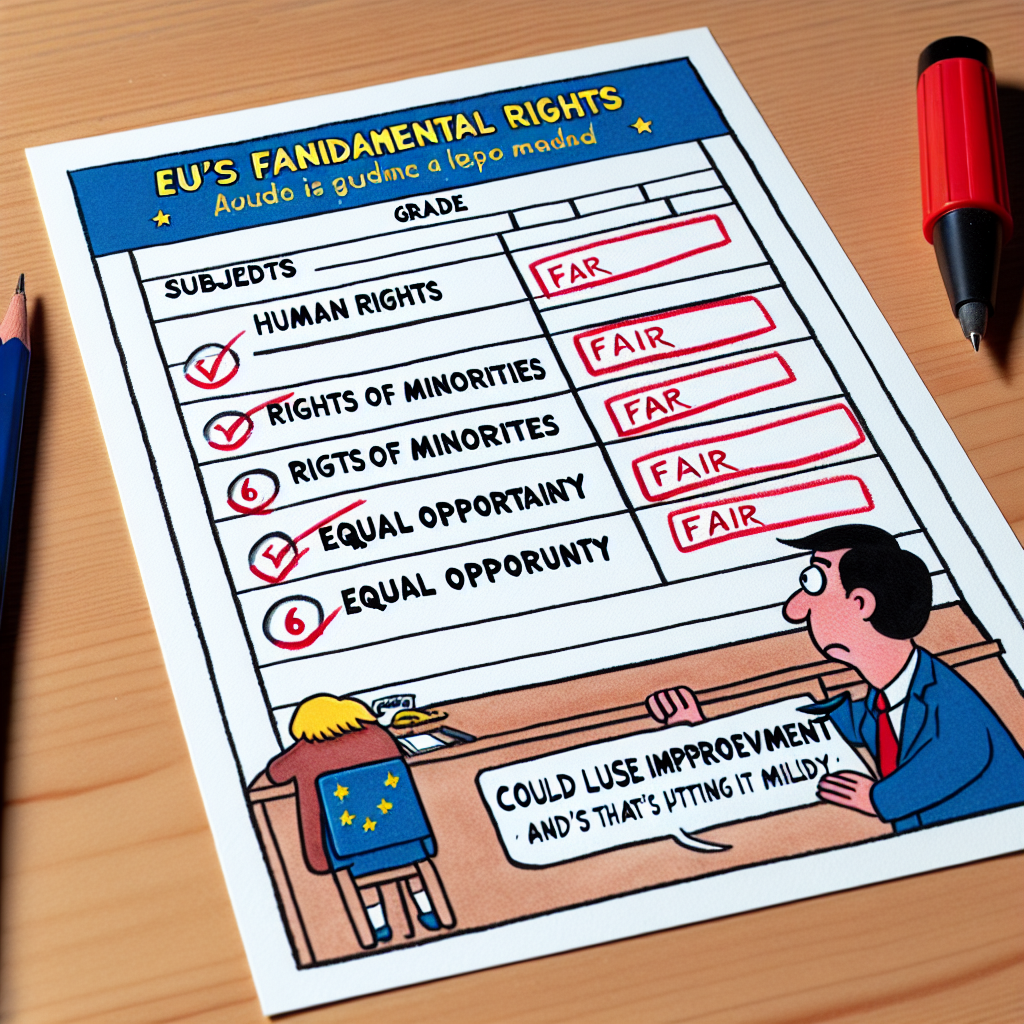
EU’s Fundamental Rights Report Card: Could Use Improvement (And That’s Putting It Mildly)
The European Parliament just dropped its annual “how are we doing on human rights?” report, and spoiler alert: we’re not getting a gold star.
In a Wednesday vote that split 328 for, 199 against, and 98 people presumably checking their phones, MEPs sounded the alarm on everything from women’s rights to media freedom. Think of it as Europe’s most serious group chat, except everyone’s concerned about the same thing.
The Laundry List of Worries
Where to begin? Women’s rights are under threat, LGBTIQ+ equality is backsliding, journalists are getting harassed, and civic space is shrinking faster than your jeans after the holidays. Parliament basically said: “Remember all those nice values we wrote down in Article 2? Yeah, about those…”
The report reads like a concerned parent’s letter, warning that democratic backsliding and political meddling in courts suggest “broader pressure on EU values.” Translation: Houston, we have multiple problems.
Borders, Bytes, and Basic Decency
MEPs are particularly worried about what’s happening at EU borders and online. They’re calling out ill-treatment of migrants, demanding better search-and-rescue operations, and reminding everyone that torture is still very much not okay (apparently this needed restating).
On the digital front, Parliament wants tougher enforcement against disinformation, election manipulation, and AI gone wild. Because nothing says “fundamental rights” like making sure your social media feed isn’t 90% foreign propaganda.
The Action Items
The wish list includes: stronger action against gender-based violence, recognizing feminicide as a distinct crime, protecting civil society organizations from being harassed, and actually enforcing those fancy equality laws gathering dust.
Oh, and they’d like to address corruption, prison conditions, poverty, housing exclusion, and environmental rights while they’re at it. No pressure, though.
Dutch MEP Anna Strolenberg summed it up: “Fundamental rights must remain non-negotiable.” The real question? Whether anyone’s actually listening.
The Bottom Line
Europe’s got 99 problems, and fundamental rights violations are… well, most of them. Now we wait to see if the Commission and member states have the “political will” to fix things—which is diplomatic speak for “let’s see if they actually do anything about this.”