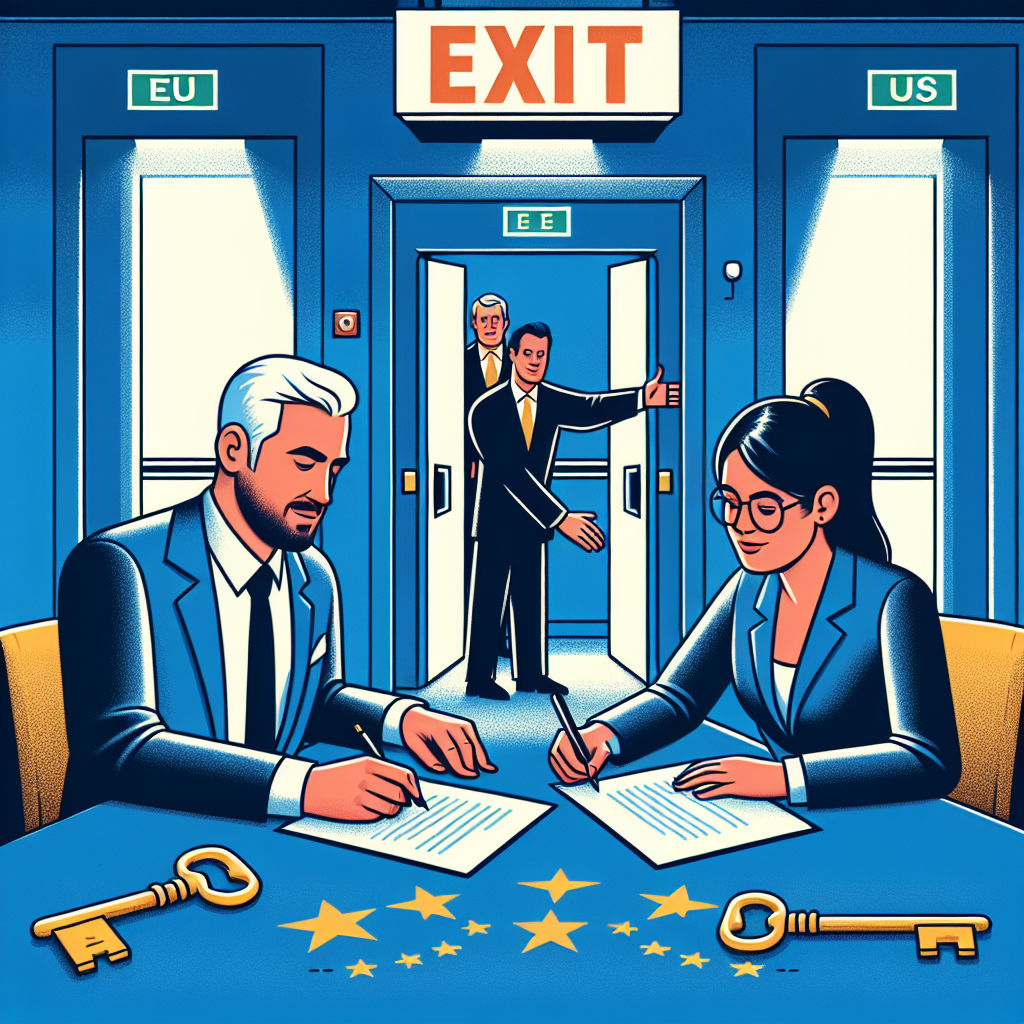
EU Plays Hardball with US Trade Deal: “Trust, But Verify (And Set an Expiration Date)”
The European Parliament just gave the US-EU trade deal the legislative equivalent of a prenup with trust issues. On Thursday, MEPs voted to lower tariffs on American goods—but with more strings attached than a marionette convention.
The Fine Print Gets Finer
Sure, the EU agreed to eliminate most tariffs on US industrial goods and roll out the red carpet for American seafood and agricultural products. But here’s the catch: they’ve installed not one, not two, but THREE different “eject buttons.”
First up is the suspension clause—think of it as the “we can take our toys and go home” provision. If the US slaps on extra tariffs beyond the agreed 15% ceiling, threatens EU territory (yes, that’s actually in there), or engages in “economic coercion,” Brussels can hit pause faster than you can say “trade war.”
Then there’s the sunrise clause, which is basically the EU saying, “We’ll believe it when we see it.” The new tariffs only kick in if America actually follows through on its promises. Novel concept, right?
And finally, the sunset clause: this whole arrangement expires on March 31, 2028. It’s like a gym membership that actually ends when you want it to, requiring a full impact assessment before renewal.
The Safeguard Mechanism
Just in case all those clauses weren’t enough, there’s also a monitoring system. If US imports surge by 10% and threaten to harm EU industry, the Commission can temporarily suspend the deal. It’s protection with a capital P.
Rapporteur Bernd Lange summed it up diplomatically: Parliament will only sign off “if the regulation contains very strong and clear safeguards.” Translation: “Show us the money, America, and keep your hands where we can see them.”
The votes were decisive—417 to 154 for one measure, 437 to 144 for another—proving that when it comes to trade deals, Europe prefers its trust issues documented in triplicate.
Now MEPs head into negotiations with EU governments, armed with what might be the most cautiously optimistic trade agreement since someone first suggested bartering with Vikings.