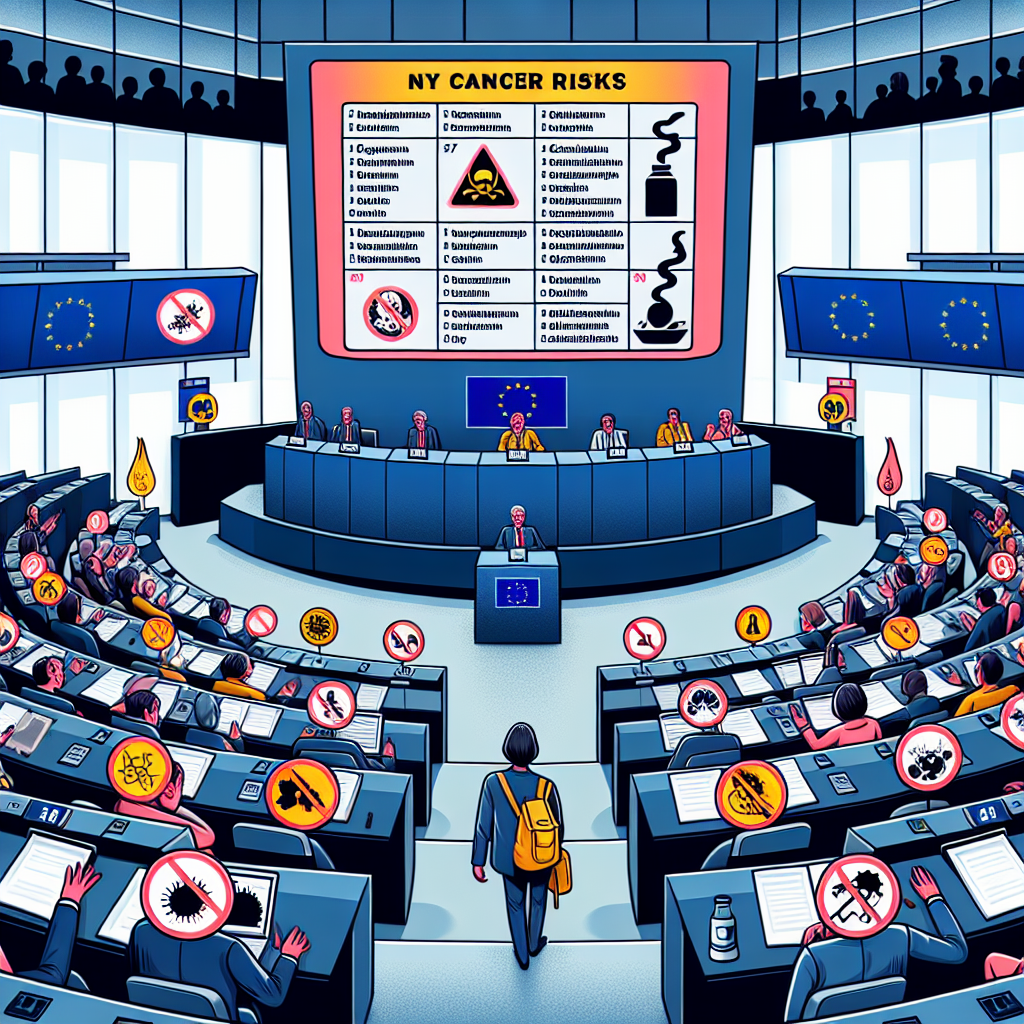
EU Parliament Says “No More Getting Poisoned at Work, Please”
In a move that might seem obvious but apparently needed spelling out, the European Parliament has decided that workers shouldn’t have to risk cancer just by showing up to their jobs. Revolutionary stuff, really.
The Employment and Social Affairs Committee just greenlit new protections against nasty chemicals with a vote so lopsided (45-0-10) it makes you wonder what those 10 abstainers were thinking. “Hmm, not sure if workers deserve to breathe clean air…”
What’s Actually Changing?
The sixth—yes, sixth—revision of the tongue-twisting “carcinogens, mutagens and reprotoxic substances directive” sets new limits on chemicals that sound like rejected sci-fi villain names: cobalt compounds, polycyclic aromatic hydrocarbons, and the delightfully named 1,4-dioxane. These beauties are used in batteries, steel, textiles, and other industries where workers have apparently been playing chemical roulette.
MEPs also threw in isoprene, which can cause everything from throat irritation to liver cancer. Fun times in the rubber factory!
The Good Stuff
Employers will now have to provide actual protective equipment that—wait for it—fits workers’ bodies. Groundbreaking! Workers wearing these suits also get regular breaks in contamination-free zones, because apparently “just hold your breath for eight hours” wasn’t cutting it.
Firefighters get special attention too, since running into burning buildings exposes them to slightly more hazardous materials than your average office job.
The Numbers Game
According to the European Commission, these measures could prevent 1,700 lung cancer cases and 19,000 other illnesses over 40 years. That’s roughly 120,000 workers currently getting diagnosed with work-related cancer annually in the EU—a statistic that really shouldn’t exist in 2025.
As rapporteur Liesbet Sommen put it: “No one should be made sick just by going to work.” Hot take, but we’ll allow it.
The directive now heads to full Parliament approval before negotiations with the Council begin. SMEs will get support implementing the changes, and gender-specific vulnerabilities will be considered because—surprise—not all bodies react to toxins identically.
Who knew workplace safety could be this complicated? Oh right, everyone who’s ever worked with chemicals.