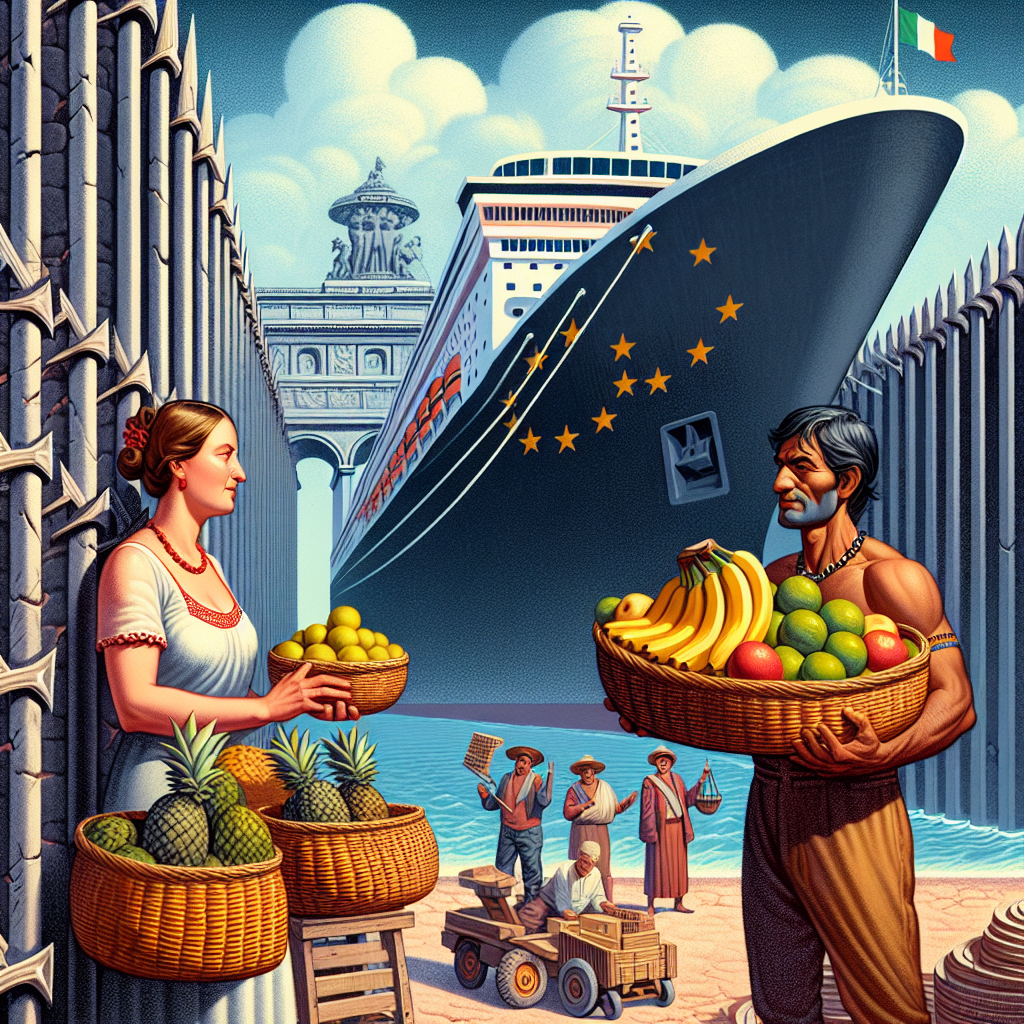
EU Gives Developing Countries a Trade Hug (With Some Strings Attached)
The European Parliament just voted to keep the doors open for developing nations—at least when it comes to tariffs. With a solid 459-127 vote (and 70 MEPs apparently too confused to pick a side), they’ve renewed the Generalized System of Preferences for another decade.
What’s the Deal?
Think of it as the EU’s version of “shop here, pay less!” for 60-plus developing countries representing 2 billion people. These nations can now export goods to Europe with reduced or zero tariffs, because nothing says “we care” quite like waiving import duties.
The Fine Print (Because There’s Always Fine Print)
Want those sweet trade preferences? Better sign up for some human rights and environmental conventions. The Paris Agreement? Check. Convention on the Rights of the Child? You bet. It’s like a membership club, except instead of a gym you never use, you get access to European markets.
The Controversial Bits
Here’s where things get spicy. The EU wanted to link trade benefits to countries cooperating on taking back irregular migrants. Parliament basically said “hold on there, partner” and added enough bureaucratic hurdles to make this harder than assembling IKEA furniture blindfolded. Countries now get a 12-month engagement period before anything happens, and the least developed nations get a two-year grace period. Translation: this conditionality will be “very hard to trigger.”
Rice, Rice Baby
European rice producers were sweating bullets, so Parliament threw them a lifeline. If rice imports surge by 45% over a 10-year average, automatic safeguards kick in. It’s protectionism, but make it sound technical.
The Bottom Line
The EU gets to look magnanimous while protecting its own interests. Developing countries get market access with some homework assignments. And European rice farmers can sleep at night. Democracy in action, folks—messy, complicated, and somehow functional.
The rules kick in once the Council rubber-stamps everything, lasting until 2035. Mark your calendars.